

Want to grow a social media brand without ever showing your face?
You’re not the only one. Thousands of creators are building huge audiences and making serious money online without stepping in front of a camera.
The secret isn’t luck. It’s strategy.
In this guide, I’m going to walk you through exactly how to build a faceless social media brand that works. Step by step.
We’ll cover content ideas, real-world examples, and proven tactics to build trust, engagement, and influence. Without ever showing your face.
By the time you’re done, you’ll know exactly how to start, grow, and monetize your brand.
What is a faceless social media brand?
A faceless social media brand is exactly what it sounds like; a brand that builds a presence on social media platforms without showing the face of the creator on camera.
Instead of posting selfies and talking-head videos, they share ‘faceless content’ like memes, animations, text-based stories, art, screen recordings, product showcases… that sort of thing.
The creator stays behind the curtain and lets the content do the talking. This makes it a popular approach amongst those who value privacy, feel camera-shy, or just want the focus to be on the content rather than themselves.
The pros and cons of going faceless
Before you commit to staying off camera, it’s worth weighing the benefits and drawbacks. Here are the key pros and cons of building a faceless brand on social media.
Pros
- Anonymity. Faceless social media brands get to keep their identity and personal life separate from their online presence, which is a big deal if you value privacy and anonymity.
- Lower pressure. You get to stay behind the curtain, so there’s no pressure to be ‘camera-ready’. Your appearance, confidence, and personality won’t affect the brand. You can still create in your PJs 😉
- Evergreen appeal. Your content stays relevant longer because it isn’t tied to your appearance, age, or personal brand.
- Scalability. Faceless content creation tends to be easier to outsource and automate, as you don’t necessarily have to record anything at all.
- Wider creative freedom. Faceless social media brands have more flexibility with the kind of content they produce. You can experiment with different content formats and styles without being locked into a single persona or on-camera identity.
Cons
- Lack of authenticity. Modern audiences crave authenticity and relatability. Something that’s harder to demonstrate if you only publish faceless content.
- Harder to build trust. Audiences may struggle to connect with and trust you as a creator if they can’t see your face. This can make it harder to retain loyal viewers and build a strong community.
- Slower growth. The aforementioned lack of authenticity and trust makes audiences less likely to engage with your content and subscribe/follow, making it harder to grow.
- Heavier editing requirements. It’s harder to fill the blank spaces in a video if you can’t just cut to your face. As such, faceless content usually involves a lot more editing and takes more time to produce.
- More competition. There’s a lot more competition in the faceless side of social media, especially since AI tools have made it easier for brands to pump out faceless content quickly.
- Some people will assume your content is made by AI. There are a lot of people that hate AI content. One guitar brand used AI in a social media post and the backlash was so bad that they removed it within 24 hours. They also lost a lot of followers and damaged their reputation.
5 successful faceless social media accounts to learn from
A lot of new social media creators worry that it’s impossible to successfully grow a faceless account. But they couldn’t be more wrong.
Across every platform, creators are proving that you don’t need to show your face to build a massive, engaged audience.
Here are five standout examples that show just how far faceless content can take you.
Wendy’s (Instagram)
Wendy’s Instagram page is a masterclass in faceless branding. Instead of relying on a spokesperson, the fast-food chain uses sharp wit, memes, pop culture references, UGC, and stylized food photography to show its personality and drive massive engagement.

Their tone is so distinct, fans recognize the ‘voice’ of the brand instantly from the post captions alone—no face needed.
SunnyV2 (YouTube)
SunnyV2 creates documentary-style video essays that dive deep into the rise and fall of online personalities.
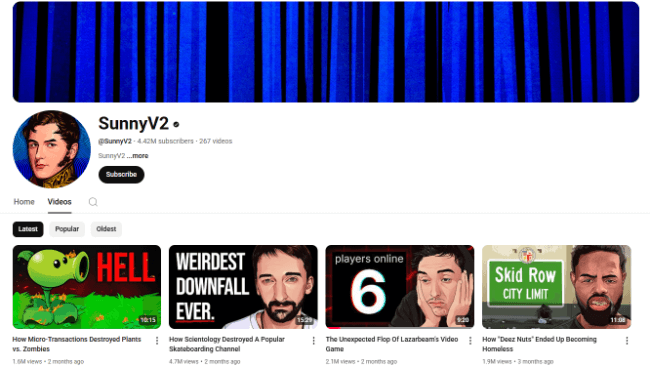
His content features stylized narration, archive footage, and screenshots, all seamlessly edited together to tell a story—but never his face.
With millions of subscribers, he’s proof that strong storytelling and editing can carry a channel without any personal branding.
Ironmouse (Twitch)
Ironmouse is a virtual influencer or ‘VTuber’ powered by animation software.

‘She’ appears as a horned demon with pink and purple hair. The avatar is controlled by a real person, of course, but the creator herself never appears on-screen.
Her unique blend of gaming, singing, and just chatting content made her the most-subscribed Twitch streamer of all time last year, proving how far you can go without ever appearing behind the lens.
ManyATrueNerd (YouTube)
ManyATrueNerd is a popular YouTube channel known for its gaming content. While the creator behind the channel (Jon) records all his own voice-overs, he never actually shows his face on camera. Instead, the focus is on the game he’s playing.

This adds to the magic. Without being able to see his face, his community is free to use their imagination and have mythologized him as a sentient egg box.
His channel is a great example of how it’s possible to connect with audiences and build a strong community without appearing on-screen.
@mrstorytelling (TikTok)
@mrstorytelling is a standout faceless TikTok creator who crafts engaging narratives using AI-generated visuals and compelling voiceovers. His content delves into historical events, mysteries, and intriguing stories, without revealing his identity.

The faceless format adds mystery, keeping viewers coming back for more episodes. This approach has garnered him over 690,000 followers, making the channel a prime example of how you can hook an audience with strong storytelling alone.
How to build a faceless social media brand in 10 steps
Alright, let’s get to the good stuff. Here’s a step-by-step guide to help you put together your strategy and build a successful social media brand from the ground up.
Step 1: Choose a niche
The faceless accounts that grow fast are those that focus on a clearly defined niche.
Your niche is the topic or subject area that all your content revolves around.
Examples: Motorcycles, self-care, simple living, FPS gaming, puppy training, weight loss… You get the idea.
Here are some tips to help you find your niche:
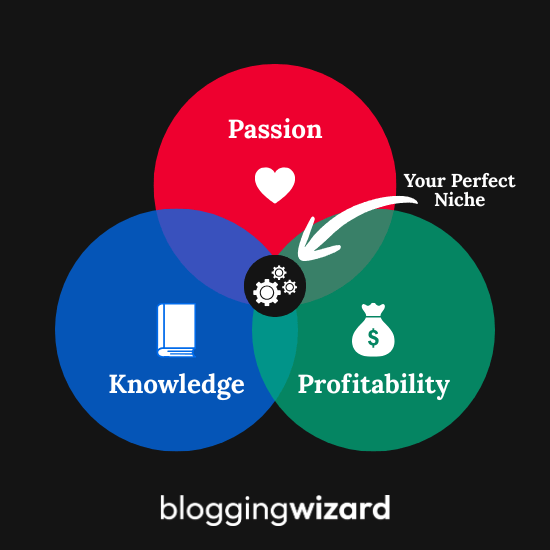
- Choose something you’re passionate about. If you’re going to be creating content around one topic for a long time, it needs to be something you’re interested in. If you choose something you find boring, you’ll get burned out.
- Choose something you’re knowledgeable about. It’s not enough to be interested in a topic, you also need to know a lot about it so you can create content that others will find genuinely valuable.
- Make sure there’s an audience for it. There needs to be an audience for your content, so use keyword research and competitive analysis to check that people are actively looking for and consuming content in your niche before you go all-in.
- Don’t go too broad. Broad niches like ‘cooking’ or ‘fitness’ are incredibly competitive. To stand out, go narrow. The more specific your focus, the easier it is to attract the right audience and grow. For instance, another general cooking account is going to get lost in the noise, but a channel dedicated to one-pot camping recipes? That’s a hit.
But, in a nut shell, here’s where your ideal niche will be:
2. Pick your platform(s)
Next, choose which social media platforms you’re going to be focusing on.
It’s possible to grow an audience across multiple social networks in tandem, but I’d suggest putting most of your time and energy into just one or two for best results.
Aim to pick the platform(s) that are the best fit for your content style and audience. Here are some of your main options:
- YouTube. Best for long-form faceless content like video essays, animations, commentary, tutorials, gaming, and storytelling.
- TikTok. Great for short, snappy faceless videos like short animations, text-based stories, listicles, or quick tutorials. Perfect for faceless creators looking to go viral fast with strong hooks and visual creativity.
- Instagram. Great for meme pages, aesthetic visuals, quotes and graphics, photography, art, and product-focused content. Ideal for faceless brands in niches like fashion, food, or motivational content.
- Twitter (X). Ideal for written content, meme sharing, viral threads, and niche commentary. Works well for anonymous creators who want to build authority or a personality through tone and insight.
- Pinterest. A visual search engine that’s perfect for faceless niches like DIY, decor, recipes, or digital products. Best for sharing evergreen content and driving blog or shop traffic over time through infographics, photography, art, graphics, etc.
- Twitch. Live streaming platform that’s perfect for VTubers, virtual influencers, or gamers using avatars or voice-only streams. Great for building real-time engagement without showing your face.
Note: The key here is to invest in a social media scheduler that allows you to cross promote between as many social platforms as possible. And as easily as possible. When it comes to visual content, Pallyy and Viraly are both great options. Viraly in particular has a great post recycling feature which is ideal for anyone publishing evergreen content.
3. Build your brand identity
If you’re not showing your face, your brand identity needs to do the heavy lifting.
Everything from your visuals to your tone should work together to make your content instantly recognizable. And memorable.
Here’s how to nail your social media branding:
- Establish a visual style. Choose a consistent color palette, fonts, and design elements (like borders, icons, or filters) to use across all your content. This will help your posts stand out and feel cohesive.
- Develop a distinctive tone of voice. When users can’t see your face, they rely on your tone to understand your personality and what you’re all about. Are you sarcastic? Wholesome? Mysterious? Decide how you want to ‘sound’ in captions, voiceovers, and replies – then stick with it.
- Create a mini style guide. Document your visual style and tone by jotting down rules and guidance in a style guide. You and your team can refer back to this when making content to stay consistent.
- Find ways to be relatable. You might be faceless, but that doesn’t mean you have to be cold or robotic. Aim to be relatable and humanize your brand through your content. Share behind-the-scenes moments, use humor, and show empathy in your messaging to drive connections.
4. Plan your content strategy
For faceless creators, content is everything. You don’t have a personal image to lean on, so the value, quality, and creativity of your posts need to be spot on.
Start by planning a diverse content mix. Experiment with different formats to find what resonates with your audience, then double down on the formats that perform best.
Some of the best content formats for faceless accounts include:
- Voiceovers. Add personality through your voice without showing your face
- Animations. Great for explainers, storytelling, and humor
- Screen shares. Ideal for gaming content, tech tutorials, and walkthroughs.
- Text-based posts. Tell stories, make your audience laugh, or offer valuable information in captions and text overlays.
- Video essays. Combine narration, visuals, and research for deep-dive content
- Memes. Easy to create, engaging, and highly shareable
- Unboxings. Show off products without appearing on camera
- Quotes & inspiration. Fast, easy-to-produce content that still provides value
- Educational content. Share facts, tips, or niche insights through faceless graphics and videos
To come up with ideas for social media posts, it can help to look at what’s already working.
Competitive analysis is where the magic happens. You need to be studying the top-performing content from popular faceless accounts in your niche. This can help spark ideas and allow you to reverse-engineer content that your target audience is already engaging with.
5. Optimize for reach & engagement
Creating great content is only half the battle – you also need people to see it. That means optimizing every post to work with the platform’s algorithm, not against it.
Algorithms reward engagement, so your goal is to stop the scroll and drive as many interactions as possible.
In faceless videos, use strong hooks to grab attention in the first few seconds. Include calls to action (like ‘save this’, ‘comment below’, or ‘tag a friend’) to encourage engagement. Ask questions to invite replies and spark conversations.
Leverage trending audio to stay relevant. This is especially on platforms like TikTok and Instagram Reels.
And for discoverability, don’t forget SEO basics. Use relevant keywords in your titles, captions, descriptions, and alt text. Optimize your videos and social media posts to match what people are searching for—this is especially important on search-driven platforms like YouTube and Pinterest.
On platforms like Instagram, use targeted hashtags to help with discoverability and get your content in front of the right audience.
6. Devise a posting schedule
Consistency is key on social media. Posting regularly and at the right times helps you stay top of mind and maximizes your visibility in your target audience’s social media feeds.
That’s why you need to put together a posting schedule that you can stick to.
Using a scheduling tool like Pallyy or Viraly can make this process way easier. It lets you plan and schedule posts weeks (or even months) in advance, so you’re not scrambling to post content every day.

Viraly allows you to tag your content based on category, so you can make sure you’re publishing a variety of different content types. There’s also a post recycler that’ll help you get more mileage out of the content you publish without getting shadow banned.
7. Engage with your audience
If you’re not showing your face, building trust takes extra effort—and that starts with community.
Faceless creators can’t rely on facial expressions or personal charisma to connect with their audience, so they have to connect in other ways.
One way to do that is through interactions on social media: Respond to comments, reply to DMs, ask questions, and show appreciation when people engage with your content.
Make your audience feel seen and valued. The more you engage and interact, the more likely people are to stick around, share your content, and become loyal fans.
To stay on top of conversations across multiple platforms, consider using an inbox management tool like Pallyy’s unified social media inbox.

It pulls in all your comments, DMs, and messages from different channels into one dashboard, so you can reply to everything in one place.
8. Implement growth tactics
Creating great faceless content isn’t enough. You also need to promote that content far and wide. That’s where growth tactics come in.
One powerful marketing tactic you can try is to collaborate with other creators.
Even if you’re both faceless, you can still co-create content, cross-promote each other’s posts, or shout each other out to tap into new audiences and benefit from the trust they’ve already built.
Here are a few other effective growth tactics worth considering:
- Repurpose content. Turn one post into multiple formats across different platforms to get more mileage out of each idea and maximize audience touchpoints. For instance, you could turn a YouTube video into 5 TikTok clips and 5 Instagram Reels.
- Join niche communities. Engage in relevant subreddits, Facebook groups, or Discord servers where your target audience already hangs out to connect with them and promote your content.
- Run giveaways or contests. Use a contest tool like SweepWidget to set up a social media giveaway and encourage shares, tags, and follows to boost visibility, drive engagement, and accrue followers quickly.

- Use paid promotion strategically. A small budget behind a high-performing post can help you scale up faster, reaching people you wouldn’t be able to reach organically.
9. Monetize your account
Once you’ve built an audience, it’s time to start earning from it.
Faceless creators have plenty of monetization options, including:
- Sponsorships & brand deals. Let brands pay you for sponsored posts, ambassador deals, etc.
- Ad revenue. Earn passive income from social media platforms through ad programs like the YouTube Partner Program, the TikTok Creator Fund, and Reels bonuses.
- Affiliate marketing. Promote products you love to your audience and earn commission on every sale you refer. Tip: Find relevant affiliate programs on affiliate networks like PartnerStack.
- Selling digital products. Create and sell digital products like eBooks, templates, courses, or presets. Tip: Use Sellfy to build your digital product store and start selling in under an hour.
- Sell merchandise. Use Sellfy or Printful’s print-on-demand catalog to upload your designs to make custom merch mockups, and only pay for what you sell. The POD supplier handles printing and shipping.
- Fan support. Use platforms like Buy Me A Coffee, Patreon, or Ko-fi to let your audience support you directly through tips, donations, and monthly subscriptions.
10. Analyze & refine your strategy
To keep growing, you need to know what’s working and what isn’t.
Use social media analytics tools like Social Status to track your content performance, audience growth, and engagement metrics across platforms.
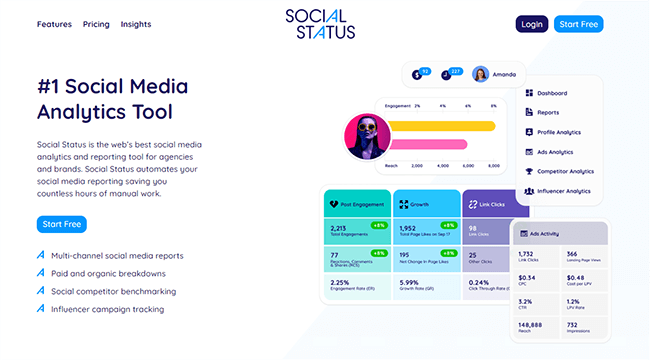
These insights show you which posts hit the mark and which fall flat. Use that data to tweak your content, posting times, and formats for better results.
Regularly reviewing and refining your strategy helps you stay ahead of trends and optimize your efforts so you can grow your faceless brand faster.
Alternatively, most social media publishing tools will have at least some basic analytics that should be enough. But if you can justify a tool like Social Status, it’s well worth it because you can easily keep tabs on your competitors across key social platforms.
Bonus tips for building trust & engagement
The hardest part of building a successful social media brand is building trust.
Humans have a natural ability to connect with faces. When you go faceless, you have to connect with your audiences without that to fall back on. And that’s not easy.
With that in mind, before we wrap up, here are a few bonus tips to help you build that connection and earn your audience’s trust without showing your face.
Show the human side of your brand
Center your content strategy around relatability, storytelling, and relationship building. Be authentic and let your personality shine through every post you make to humanize your brand.
Share UGC from your fans
Sharing user-generated content (UGC) helps to strengthen your community, the hardest part of building a faceless brand.
It shows fans you care and makes them feel like they’re a part of your channel. Plus, it’s a great way to fill out your content pipeline.
Be original and innovative
Don’t post the same generic content everyone else is posting. If you do, you risk audiences seeing you like another AI-slop account to scroll past.
Instead, aim to be original and innovative. Post creative content that no one else has posted before. That’s how you build an audience.
Use your real voice (not an AI-generated voice)
Audiences are growing tired of faceless AI-generated slop and it’s easy to spot. When social media users see faceless content with generic AI voiceovers, they assume it’s low-effort and scroll past.
So, avoid using AI voiceovers if you can help it. Use your real voice to show originality and authenticity, and to stand out from the slop.
Don’t be invisible
Building a successful faceless brand doesn’t mean being invisible. You can still build trust by creating a behind-the-scenes page on your blog. Use it to showcase your workflow, tools, and what you’re working on rather than your personal identity.
Final thoughts
Now, you know how to build a successful faceless social media brand.
The key takeaway: It’s possible to grow a huge following without ever showing your face on social media. But it takes the right approach.
You have to work harder to build audience trust and community when you can’t rely on that face-to-face connection.
Aim to consistently create high-quality, valuable content, establish your own unique and distinctive brand identity and voice, regularly engage and interact with your fans, and utilize smart growth tactics to promote your content.
Do all that, and you’ll grow.
But despite what all the creators selling courses teaching this topic will tell you; while faceless may be the easiest approach, you’ll develop a stronger connection with your audience if your face is in your videos.
And if you don’t feel comfortable being on camera now? Create faceless videos now. You can always film yourself once you’re ready.
Disclosure: Our content is reader-supported. If you click on certain links we may make a commission.
